
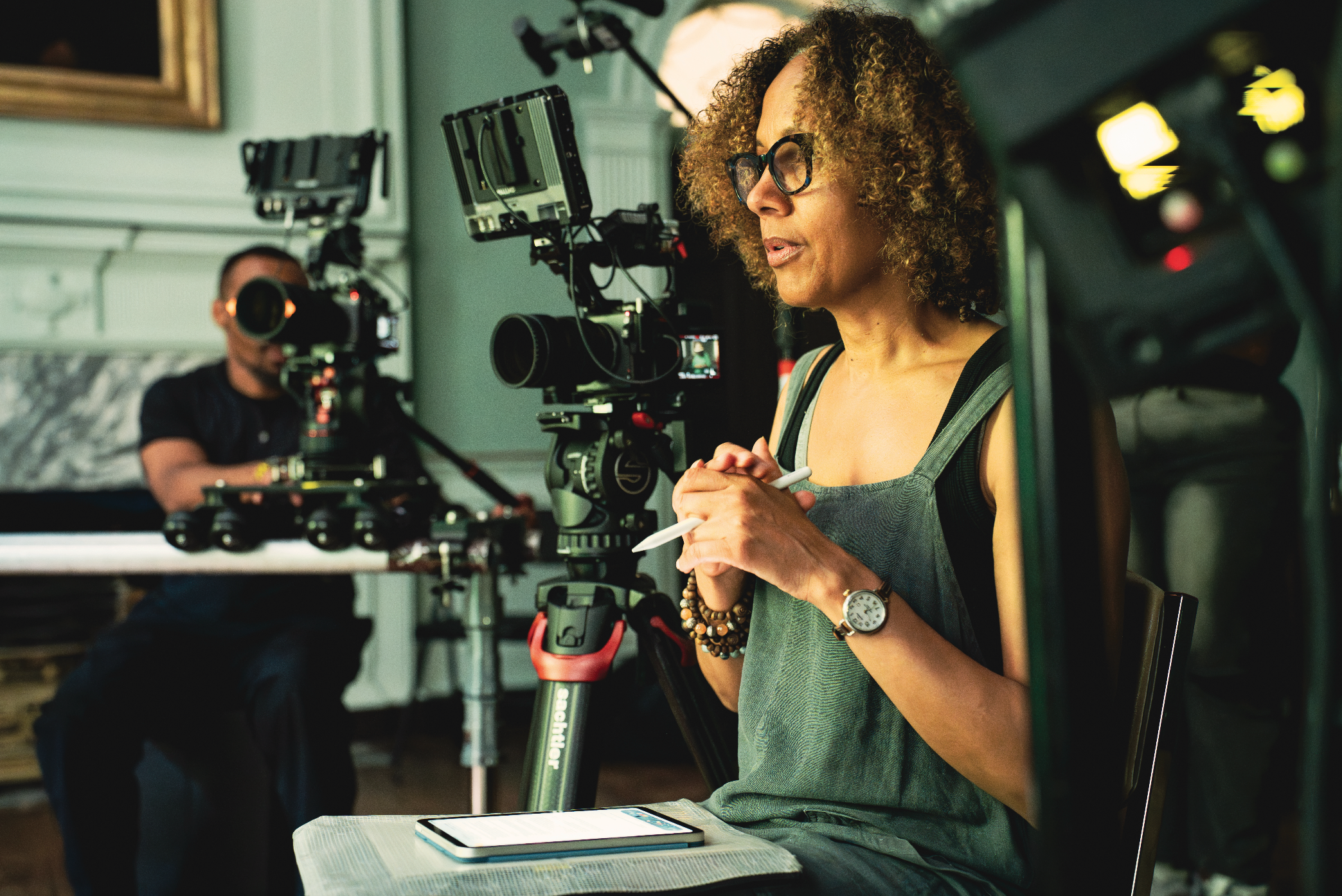
Filmmaker Stacey Holman. PHOTO by Will Roye
Stacey Holman’s Declarations
by Charles McGuigan 06.2026
I sometimes think our history is a writhing mass of nuance and contradiction presented by opposing forces—one preaching a doctrine of exceptionalism, the other incapable of acknowledging how the mores of a people change over time. It’s particularly frustrating in this era when certain states have decided to essentially rewrite the history of the Black experience in America, while a commander-in-chief has created a gallery of pictures and photos of every American president, each one accompanied with a brass plaque that is fraught with outright lies. All of this is especially disheartening as we prepare to commemorate the 250th anniversary of our nation’s birth in Carpenters’ Hall up in Philadelphia. That memorable day when a recently formed Continental Congress adopted the Declaration of Independence, severing ties with a colonial ruler. It is a singular document in the wide breadth of human existence that includes one of the most radical sentences ever written, which begins, “We hold these truths to be self-evident, that all men are created equal . . .”
Now, those truths did not, at that time, apply to all human beings living in the Thirteen Colonies. Among those excluded were Indigenous people, enslaved Africans, women, and the many White men who did not own land. Yet these words were almost immediately embraced by all freedom-loving human beings in the United States, and elsewhere in the world. These words resonated in Haiti and indirectly led to the largest and most successful slave revolt in history, which in turn led to the abolition of slavery in that French colony in 1793, and a year later in the entire French empire.
“If we look at that long, run-on sentence, we can really see that everybody is seeking this sort of equality,” Stacey Holman tells me. “Everybody's seeking happiness. Everyone's seeking freedom. And that's the beauty of those words.”
Through her seamless storytelling, Stacey unravels this often tangled history in her latest documentary film, titled simply Declarations.
ThisPBS specialwill premiere on June 20 at the Museum of the City of New York, and on June 29 will be broadcast locally on VPM. Stacey is a Harlem-based filmmaker and her film credits are many. She directed and produced several award-winning projects including episode three of the 2018 PBS series Reconstruction: America After the Civil War hosted by Henry Louis Gates, Jr. She was a producer on Tell Them We Are Rising: The Story of Black Colleges and Universities, a documentary directed by Stanley Nelson that aired in 2018 on PBS’s Independent Lens. She cut her teeth at Firelight Media, earned her master’s at New York University’s Tisch School of the Arts Graduate Film Program.
Her current film, Declarations, centers on four main characters who lived through the turbulent times of the American Revolution, yet were denied the promises of the founding document. They had one thing in common: They were all black.
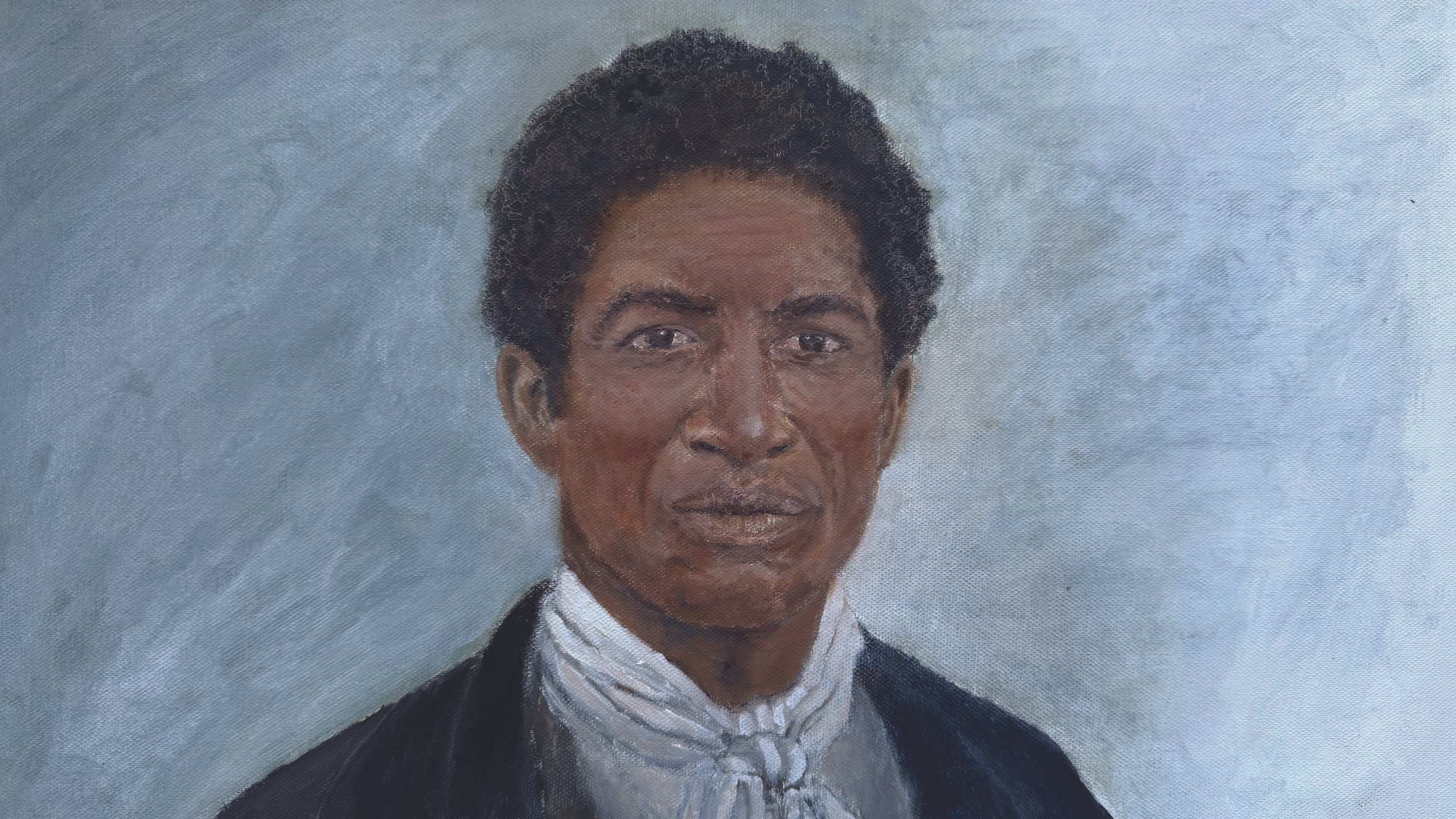
ABRAHAM PEYTON SKIPWITH Original art by Hudson Campbell.
Here’s something else—three of the four subjects of the film were from Virginia. And that was no accident. “Gary Flowers says Virginia's ground zero, and Richmond's history definitely speaks to that,” says Stacey. And though she was familiar with Jackson Ward and Maggie Walker, she was not familiar with the story of Gabriel Prosser. “Which was amazing,” she says. “In an original treatment we were going to cover Gabriel's Rebellion but due to time, we couldn't. But again it just speaks to these moments in time where Black individuals are just finding ways to get their freedom, and at the same time recognize their worth. They recognize the laws; they recognize that these laws apply to them.”
Stacey tells me a bit about each of the four folks featured in her film.
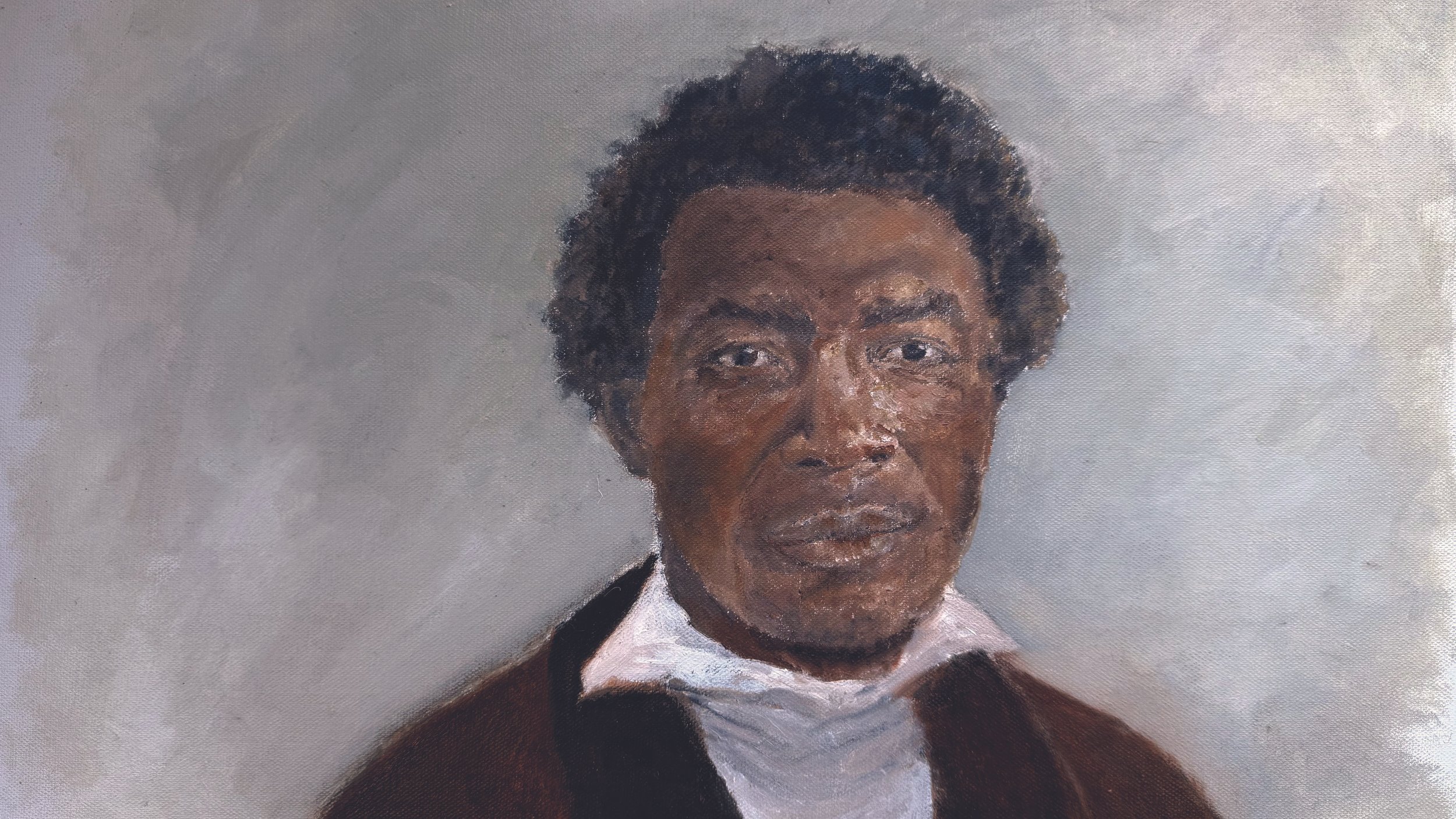
JAMES LAFAYETTE Original art by Hudson Campbell.
“One is Abraham Skipwith and how this man was really tied and connected to the people who had written or signed the Declaration of Independence,” Stacey says. “And continued to pursue gaining his freedom, but also the freedom of his loved ones.”
Born into slavery in Williamsburg, Abraham filed a legislative petition to be freed in 1785, and ultimately purchased his freedom and four years later manumitted his wife and family. He would later on purchase several parcels on the edge of Richmond in an area that would later become Jackson Ward. His home, a gamble-roofed cottage, still stands at 400 West Duval Street.
Then there’s James Lafayette.
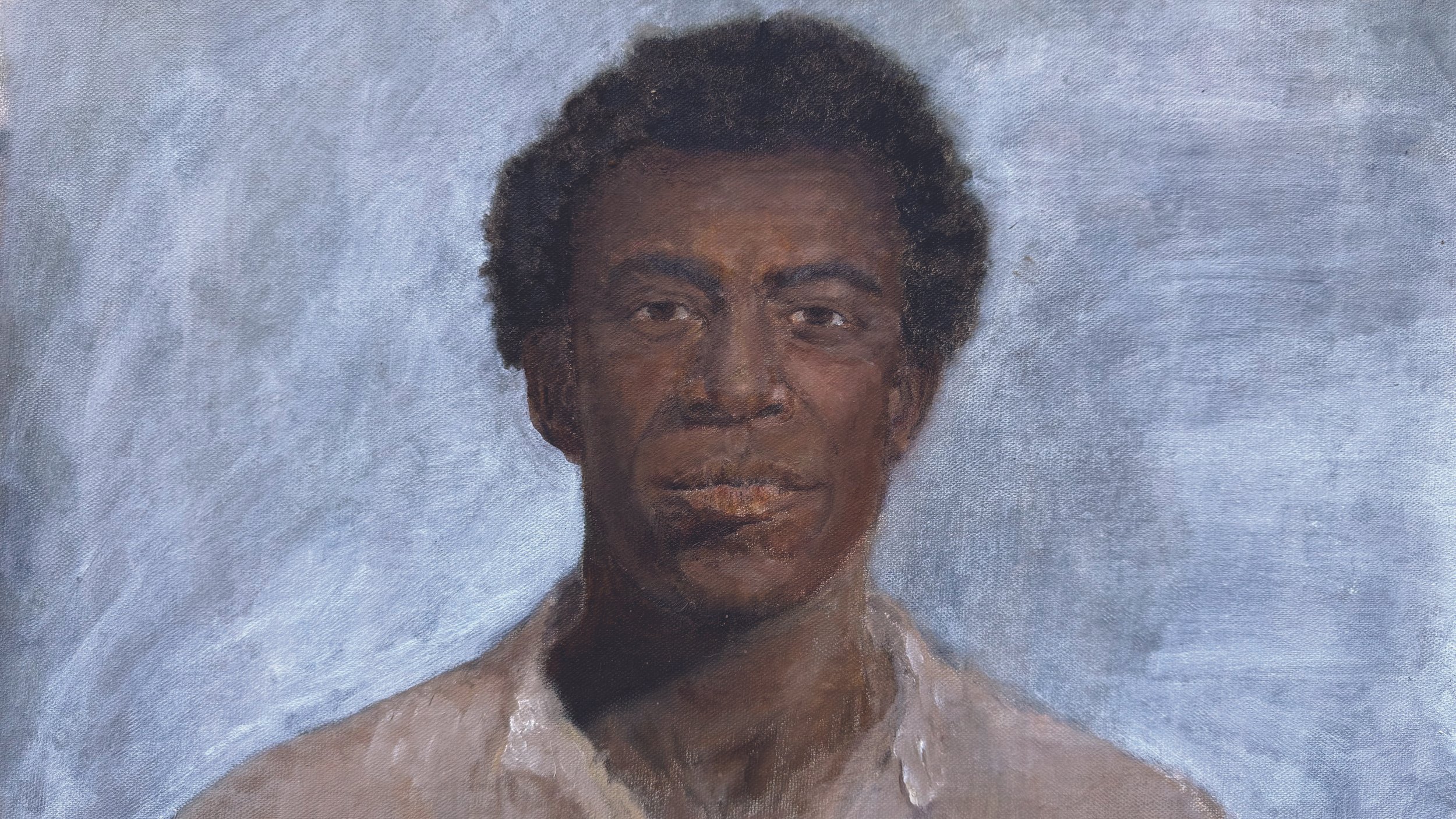
HARRY WASHINGTON Original art by Hudson Campbell.
“We look at him as a strategist,” according to Stacey. “He's described as someone who really understands messaging, who understands what's at stake, who's playing both sides, but then he decides, in the end, to lean toward the Americans.”
The next subject of the documentary is Harry Washington. “He’s one of my favorites,” Stacey says. “He was actually owned by George Washington, and we can trace his roots back to Gambia. Washington purchased him at an estate sale.”
Harry later ran away, was later captured, but managed to flee and join the British. After the defeat at Yorktown, George Washington pursues Harry again. “Washington is still trying to claim his property,” says Stacey. He is caught again, manages to escape and settle in Nova Scotia, but ultimately returns to Africa.
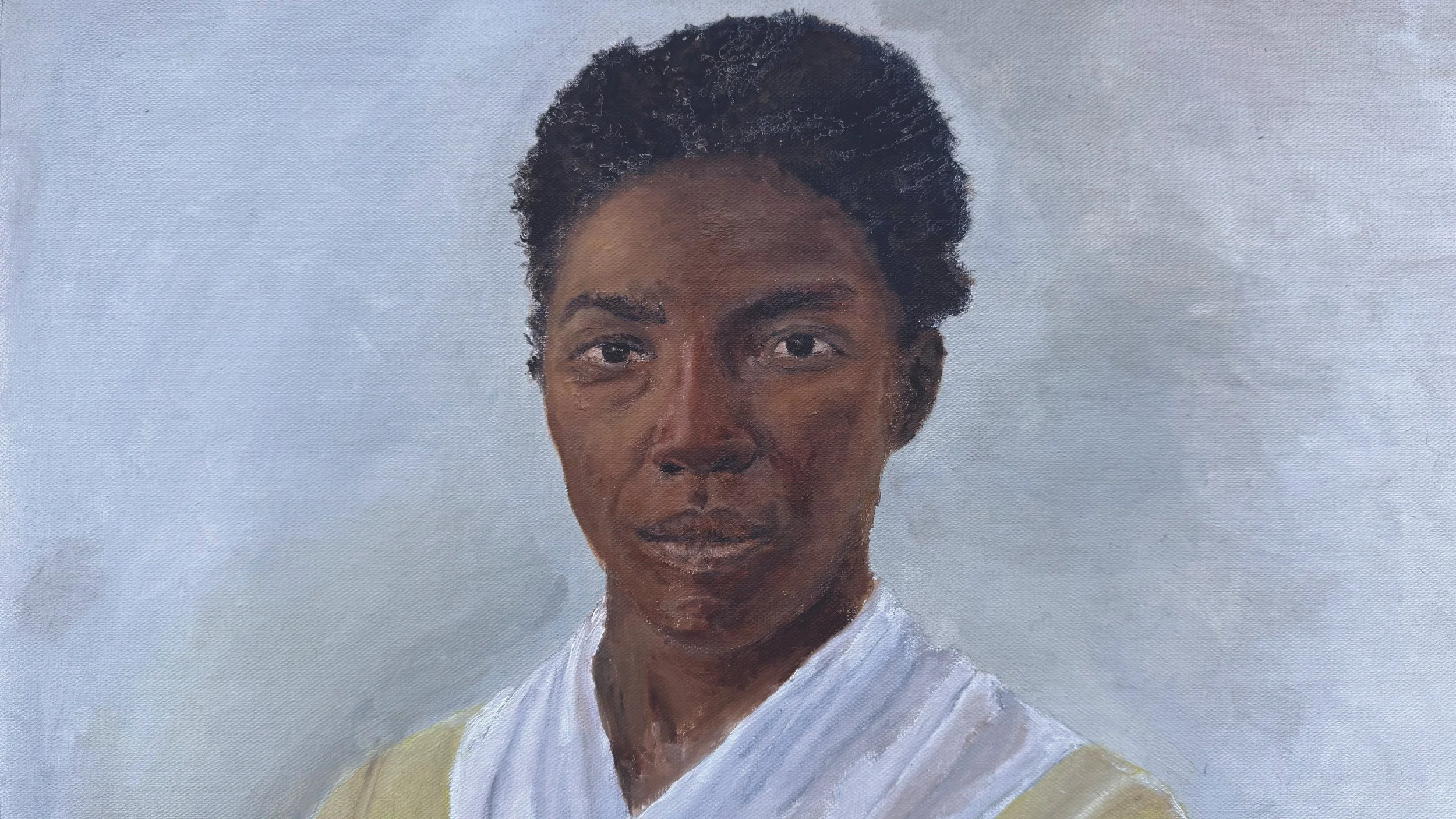
ELIZABETH 'MUM BETT' FREEMAN Original art by Hudson Campbell.
While all three of those men lived in Virginia, the final subject was a Black woman who was based in Massachusetts. Her name was Elizabeth 'Mum Bett' Freeman.
“I'm very excited that we can introduce a woman,” says Stacey. “She went through the courts to gain her freedom. They had a declaration in Sheffield (Massachusetts) that talks about people being free, and then you fast forward to the Declaration (of Independence), and then the Massachusetts Constitution where it talks about all men being free. She understood that and this woman did not learn how to read or write. So even with not having that tool she understood that this applied to her.”
All four of these people—and there were probably thousands, if not millions, of others with similar stories—would do whatever was necessary to breathe the rarefied air of freedom. “We have characters who are using all means to gain their freedom,” Stacey says. “Whether it's through seeking freedom on their own, or whether it's fighting on the side of the Americans, or fighting on the side of the British.”
Then, Stacey tells me about the joy of her profession. “One thing I love about doing documentaries is that I'm learning about subjects I've never heard of,” she says. “And at the same time I'm able to share stories with others who may not know.”
Perhaps it’s the shedding of light of truth that makes this documentary so significant in our strange political climate where facts, in some quarters, have no meaning or merit.
American history is complicated. And all too often the truth is purposefully obscured if not altogether erased. Through her investigations into our past and her ability to tell our story, Stacey Holman may have given her country its greatest gift on its 250th birthday.