
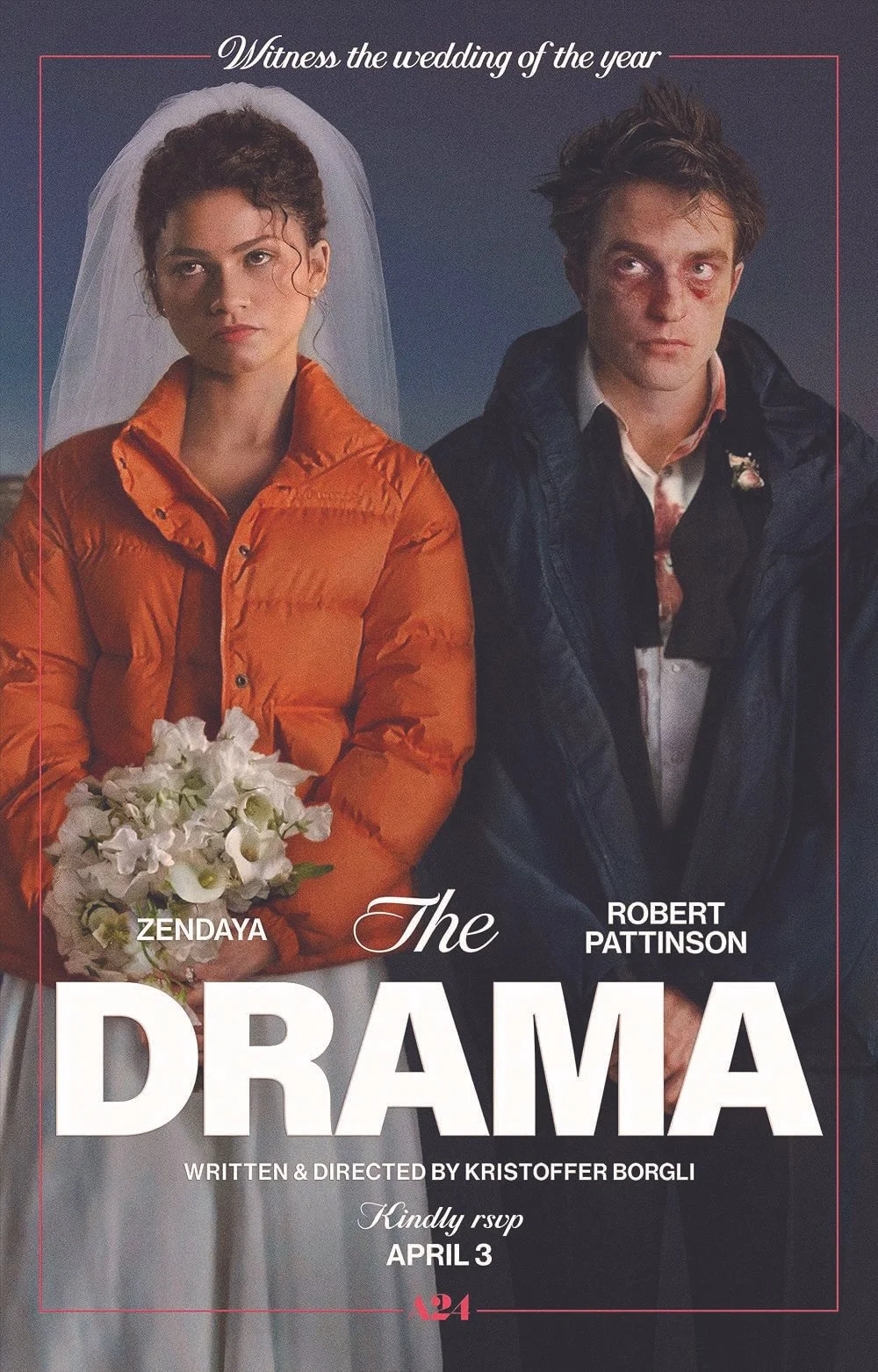
“The Drama”
Run time: 105 minutes
Director: Kristoffer Borgli
“The Drama”
by Chris Stewart 05.2026
Editing is the star of The Drama, a movie that makes constant comic use of cutting off a scene, piece of dialogue, or revelation, mid-moment. To the point where it is as much motif as method. We're introduced to our protagonists, Charlie and Emma – soon to be married - through nifty, jolting flashbacks. It's appropriate. The film deals with the perils of self-editing. How do we frame our lives when we retell them? What do we leave out, cut short, or add lilting music to in remembering, or recounting?
Charlie and Emma are affable but broken thirtysomethings, and the film surrounding them is chiefly interested in what we know when we know somebody. What we assume. What we forgive. Through a series of painfully funny, escalating incidents, we see them put to the test. Its depth is narrow without being juvenile. Its observations aren't timeless, but they are sharp.
They meet because of a lie. Their first kiss is during a mishap. Constantly, people's white lies and mischaracterizations wind up in “all's well that ends well” territory, and the best idea the film has isn't its would-be thorny central dilemma, but rather this: we allow for and accept a great deal so long as it's part of the story that got us to our current stable happiness. The exact same behaviors, if they don't lead to conventional success, might seem deranged.
This is taken to the extreme when a parlor game leads to Emma revealing something that she imagines will elicit yelps, wide eyes, shocked laughter, and vulnerable closeness. Instead, she alone among the secret-sharers renders everyone silent and uncomfortable. Charlie's response to his fiance's past is far more volatile than whatever remnants she may carry from her younger, nihilistic youth. If either of them is a growing risk to their marriage; it ain't Emma. Not unless a marriage's success is measured by its reputation in the community. Dare any couple strip that away and survive? How much of happiness is really a sense that we hold the good opinion of those who matter to us?
Robert Pattinson and Zendaya are two of our canniest young performers when it comes to bringing art and color to pop projects, and also melding their pop superstardom comfortably into art films. It's critical that we want them to be okay, here. At first it seems more urgent that we're on board with Emma. By the third act, our concern is aimed squarely at Charlie.
This has been explored before. With more bite, and a more moving, sexy conclusion in Wild Tales. With more cynicism and formal detachment in Force Majeur.
Then again, it's never gone down so briskly. There's no reason that something snarky (if not curated), bleak, and detailed should be relegated to art films. And while there's nowhere particularly new to arrive at here, in the end, it's at very least aiming to soothe the loneliness at hand, even at the cost of friends, families, onlookers, reputation, and, quite literally: face.