
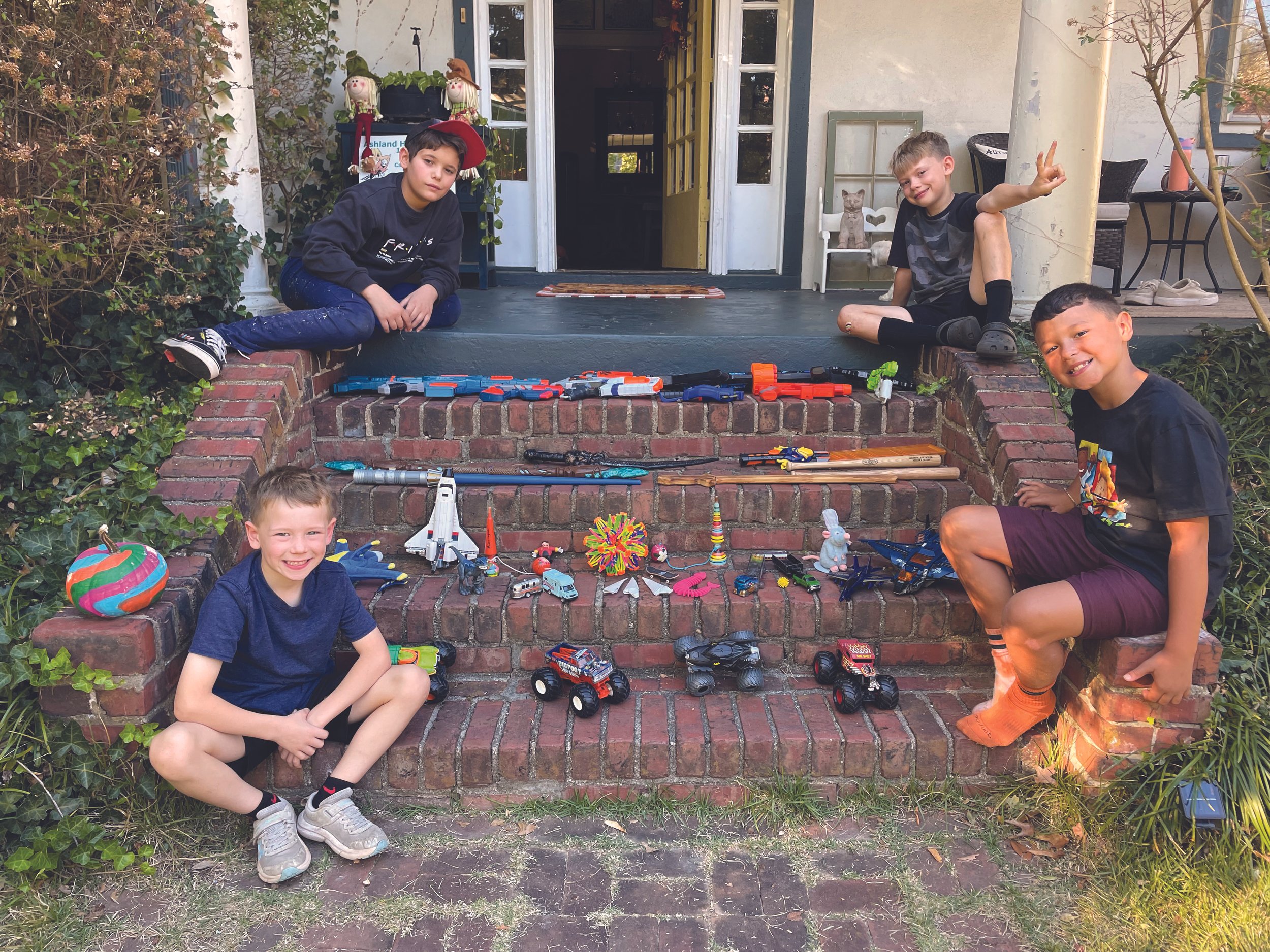
In strong communities, sharing is caring. PHOTO by Jessica DelVecchio.
The People in Your Neighborhood
by Fayeruz Regan 02.2026
In walkable neighborhoods, people communicate through objects. It happens so naturally that we aren't even aware of it.
Case in point: In my beloved Bellevue, mini library stands dot the sidewalks. This in itself is an act of sharing. But during the COVID lockdown, we noticed that people started tucking their business cards into books, promoting their side hustles, or even a long-suppressed pipe dream. This signaled to everyone that some of us might be struggling, so we sprang into action. Neighbors began leaving different things beneath the library box, such as canned goods and empty luggage. To spread joy and whimsy, others left art supplies and toys.
Small contributions like these coax us away from individualism and toward the collective. And the goal is always the same: to lift one another up.
In the mini libraries, people started scribbling comments and book recommendations in the margins of magazines. I contributed my expertise in media literacy. You see, my neighbors have been frustrated with potholes and weaknesses in the city school system for years. Our tax contributions continue to be squandered by the long arm of the military-industrial complex. In response, I'll underline expertly veiled propaganda justifying Western imperialism and colonialism. Words matter in shaping our thoughts. Communities can better advocate for themselves when they practice critical thinking and get organized.
But what motivates us to look out for one another, if our neighbors are technically strangers? In walkable neighborhoods, it's by design. If I walk the dog or buy a lottery ticket, I'm forced to walk alongside my neighbors on the sidewalk, at eye level. Society dictates that we maintain decorum; holding open doors, saying hello in passing, etc. This is quite different than suburbs, built in a way so that commuters are swept into their garages without so much as eye contact with their neighbors. They are sealed into their homes with yards large enough to promote social barriers. Individualism is common in these communities, where it's naturally harder to feel like you are part of something bigger.
Post WWII, suburban commuter neighborhoods boosted the booming automobile industry and promoted the “American dream,” with two-car garages and gasoline-powered lawnmowers. But many believe that more nefarious motivations were at play. It goes beyond the infamous “white flight” that took place in urban centers when schools desegregated.
Decades of data supports the argument that postwar suburbs were designed to foster individualism and limit community organization. Suburban planning, housing, and social infrastructure promotes systems that prioritize isolated households, dependence on cars, and segregation. In these environments, social interaction and collective action are difficult to maintain.
This has famously benefited large corporations and the politicians in their pocket. Nuclear families will spend outrageously to keep up with the Joneses, rather than helping to lift them up. And when certain narratives are broadcast to the masses, and little to no discourse follows within these communities, isolated residents are prone to swallowing the information whole.
Here in Bellevue, discourse abounds. Even when snow is piled up and the city falls silent, Dot's Back Inn will be glowing with stringed lights and booming with raucousness. From old-timers to young parents taking turns to “get out of the house,” neighbors gather to discuss everything from politics to which shows to stream. It's a lifeline for many.
This camaraderie stretches into daily life, via objects. When mittens fall from strollers, we tie them to the nearest tree. Neighbors craft boxes for dog treats. I once had a purple “Princemas” tree with Prince's face on top, and a stranger draped purple icicle lights from it. (If you're reading this – thank you!) To welcome Mila's Shawerma to the neighborhood, my son hung two giant Christmas bulbs on their gate, which stayed up throughout the season. After the restaurants close on MacArthur, local bands leave their demo CDs along the sidewalk tables.
We sometimes run into stalwarts from the suburbs - they are easy to suss out. They'll openly guard the space in front of their home as if it's reserved for them, though most houses have no driveways and everyone parallel parks. Or they tape notes to their trash cans in the alley, reading “No dog poop,” as if the receptacle belongs to them instead of the City of Richmond. Or worse, that their receptacle deserves special treatment. It's hard to shake off that suburban individualism, but in time, they'll feel the warm glow of community.