
“We Hold These Truths . . .”
by Charles McGuigan 07.2026
The American Revolution was as much a war of pens and parchment as it was of swords and muskets. For though those first shots fired at Lexington were “heard round the world,” it was the words written in the founding document that have reverberated across the globe for 250 years now, spreading the good news of self-governance and rule of law, crushing despots, overthrowing regimes that enslave the populace and deny civil liberties. In particular, it was that one somewhat run-on sentence that’s entranced everyone who’s ever read it. It begins, quite simply, “We hold these truths to be self-evident . . .”
And here’s the thing about those words “truths” and “self-evident.” Men like Jefferson and his peers were all products of The Age of Enlightenment, and every one of them was familiar with one of the most influential books ever published. Next to the Bible, this work was, and remains, the most frequently published, translated and studied book in the Western world. Written by an ancient Greek about 2,300 years ago, “The Elements” of Euclid stated that there are certain “truths” in geometry that are “self-evident.” One of those “common notions” was this: “things that equal the same thing are equal to each other.” Sort of the gist of that opening line “that all men are created equal.” Now, of course, the founders’ definition of “men” initially applied only to property-owning white males. Much more of that later from those who have made the study of this period in American history a lifelong passion, scrutinizing overlooked evidence that tells the true story about that long ago time.
Four experts over the course of four days schooled me about this declaration of independence. Each one of them is a respected scholar in their field—history. They are all professors at Virginia Commonwealth University and the breadth of their knowledge is staggering. Their names are Michael Dickenson, Carolyn Eastman, Gregory Smithers and Ryan K. Smith.
All too often people refer to the United States as a Christian nation. And while “nature’s God,” “Divine Providence,” and “Creator” are all mentioned in the Declaration of Independence, no specific deity is named, no religion cited. In the U.S. Constitution the word God in any form is altogether absent.
“In terms of the founding documents, this is not a Christian nation,” says Ryan K. Smith, Ph.D. He recalls a recent lecture series he participated in where he and three other historians were putting the Declaration into context.
“And my talk was on faith in the founding documents and the role of religion in the American Revolution,” he says. “I pointed out some of the language that we do see in the Declaration of Independence, but also what we see in the Constitution and boil it down to its punchline.” Which turns out to be: it’s impossible to put the founders in neat little boxes.
“They had pretty unorthodox beliefs, and those beliefs changed throughout their lives,” Ryan says. “And they are also coming from different faiths, different perspectives, and they, quite frankly at a pragmatic level, really couldn't agree on a religion if they had wanted to.”
A number of the founders were theistic rationalists who believed in a sort of powerful, rational, and benevolent creator who was active in human affairs. “Something somehow involved in the course of human events.” Ryan explains. “But it's not the kind of Christian God or Christianity or church framework that so many of those on the right want to frame it as today.”
Take one of the chief authors of the Declaration, who later in life describes himself as Unitarian. “Thomas Jefferson thinks that everybody's going to become a Unitarian,” says Ryan. But he did not identify as a Christian.
“He respects Jesus's philosophy, but doesn’t treat Jesus as the son of God,” says Ryan. “He's very clear on that. In the so-called ‘Jefferson Bible’ he wants to cut all of the supernatural out of the gospels. He does not believe that Jesus is somehow supernatural or the son of God. He just thinks that Jesus has presented an impressive set of moral teachings. He doesn't believe any of that supernatural stuff that Jesus's death somehow saves people and that you’ve got to drink his blood and eat his flesh.”
And then there’s the Father of the Country.
“George Washington is hilarious because, of course, he's on the vestry of the Church of England,” says Ryan. “He has a pew at Fairfax Parish church in Alexandria.” And though he sometimes attends services on Sundays, he is not present for the Holy Eucharist.
“Every time they get to that point in the service, Washington’s either not going to show up that Sunday or he leaves early,” according to Ryan. And Washington never mentioned Jesus Christ in anything he wrote. “I challenge people to go through Washington's writings and find me one time that he talks about Jesus,” he says. “He just doesn't do it.”
It seems that Washington, like some of the other founders, believed in a sort of divine providence or a great architect of creation. “He seems to be coming at it very much like a Freemason,” Ryan says. “And I don't say that, in any kind of derogatory or positive way, but he clearly is getting a lot out of his Freemasonry connections. He seems to enjoy the idea that there's this great architect that set things up, and that whether you come from this creed, or that creed, or the other creed, we can all come together.”
* * *

Ryan K. Smith. PHOTO by Cathy George.
Anyone who has ever visited Jefferson’s final resting place at Monticello knows that the three things carved into his tombstone are Father of the University of Virginia, and Author of both the Declaration of Independence and the Statute of Virginia for Religious Freedom.
Shortly after the Declaration was signed, Jefferson wrote this document which was then tabled by the Virginia General Assembly for ten years. “And the final version that gets adopted is more or less all Jefferson,” says Ryan. “I'd call it 98% Jefferson's words. They strike one little clause here or one little clause there. They don't change it substantially.”
But it was Jefferson’s friend and neighbor, James Madison, father of the Constitution and author of the Bill of Rights, who would ultimately see the statute adopted.
“Madison believes just as strongly in it as Jefferson,” Ryan tells me. “And so it's really Madison who takes it across the finish line in Virginia in 1786.”
After a short pause, Ryan adds, “Madison, who has got his fingerprints all over the Constitution, believes that religion has no business being anywhere near the Constitution, which doesn't even mention the word God.”
In a private letter to the Danbury Baptist Association, Jefferson crafts words that have been used repeatedly by the court on this matter ever since. “He writes that we have erected a wall of separation between church and state,” says Ryan. “And the Supreme Court down the line as they're trying to navigate what the First Amendment means, look to Jefferson's letter and they say ‘Well that wall of separation is a useful metaphor, so that's the metaphor we're going to apply to all these cases.’”
History is filled with ironies. It strikes Ryan as odd that some white evangelical Christians support the notion of Christian nationalism. “Their forebears would be appalled,” Ryan says. “The evangelicals and the Baptists loved the Statute of Religious Freedom. They were part of the reason that the Constitution was written the way it was, and they were certainly thrilled that Jefferson became president. They agreed it was important to keep church and state separate.”
For the Baptists and evangelicals of that era knew what it was like to be punished for their religious beliefs. “In Virginia, before the Revolution, they were imprisoned for their religious beliefs,” says Ryan. “They were whipped. One guy was urinated upon while he was in jail. They were humiliated and really treated horribly.”
* * *
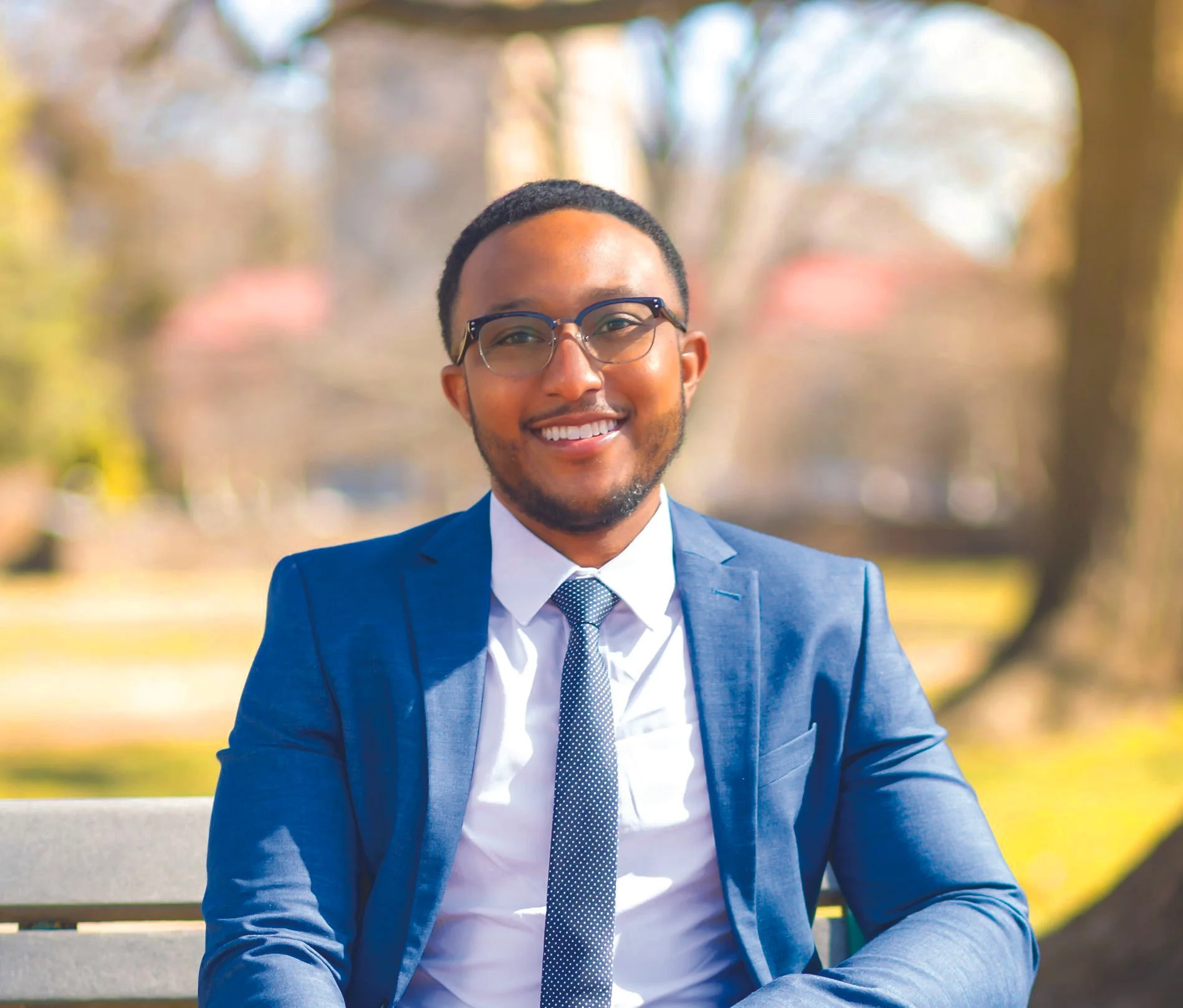
Michael Dickinson PHOTO by Ken-Won Miller.
But not as horribly as an entire segment of the population—fully 40 percent of everyone living in Virginia at the time. These were women, children, and men who were brutalized, raped, dismembered, murdered, human beings who were excluded from the founding document.
Even though enslaved Africans and African-Americans of the era were not included in the preamble of the Declaration as recipients of certain inalienable rights, the words nonetheless inspired them.
“Those words ‘we hold these truths to be self-evident’ and the discourse of natural rights—life, liberty, pursuit of happiness—are heard by the enslaved who are thinking, ‘Well that sounds spectacular, that should apply to me,’” says Michael Dickinson, Ph.D., another VCU history professor who is well-versed in the Atlantic slave trade and early African American history. “I think a really good example of this is that there were some free black folks that volunteered for the Revolution. A man named James Forten comes to mind.”
James Forten, a free Black who would become a very wealthy sailmaker, volunteered for service during the Revolution. “He was a teenager at the time and hears this language in the Declaration and he says, “This sounds amazing, this applies to me and I'm willing to fight for these ideals,” Michael tells me. James served in the nation’s fledgling navy, but after the Revolution became somewhat disillusioned. Philadelphia at war’s end became a sort of hub of Black freedom, and there was a bill before the Pennsylvania legislature that attempted to bar Black migration into the state.
So James picked up the pen. “He became very famous for writing letters to the Pennsylvania legislature,” says Michael. “This man of color writes a series of letters, using language from the Declaration of Independence to make his point.”In one of the original drafts of the Declaration, Jefferson condemns slavery as an evil in his list of grievances against King George III. In part, it reads, “He has waged cruel war against human nature itself, violating it’s most sacred rights of life & liberty in the persons of a distant people who never offended him, captivating & carrying them into slavery in another hemisphere, or to incur miserable death in their transportation thither.” Of course, this did not appear in the final draft of the founding document, but it does indicate the founders understood that this sort of enslavement was wrong.
“We think about Jefferson, and we talk about Washington, and this subject of regret,” says Michael. “And it was not just the founding fathers who felt this way. Large numbers of slaveholders acknowledged that slavery is wrong, whether that's publicly in a statement like that of Jefferson, or privately in their own correspondence, they know it is wrong.”
Consider men like John Randolph of Roanoke. “He's well-known within his personal correspondence of noting that he thinks slavery is wrong,” says Michael. “He frees his slave population at his death, but he saw slavery as a necessary evil to maintain his quality of life.”
While Michael acknowledges the lasting power of the founding documents, he warns against casting the founders as almost divine agents.
“The ideals established in the founding documents have clearly stood the test of time and have real value in their purest form” he says. “The problem is, of course, that we don't enact those ideals in a perfect way. When we deify the founders, we are unable to identify their blind spots or the ways that a more perfect union can be realized.”
He considers how the Supreme Court has essentially attempted to gut the Voting Rights Act, and in the same breath mentions Dr. Martin Luther King, Jr.’s words about the arc of the moral universe bending toward justice. “We tend to think about progress as continual,” he says. “But if we look historically at the bigger picture, particularly the history of this nation, its progress is incremental. Sometimes two steps forward, three steps back.”
He remembered talking with a student recently about the Era of Reconstruction, and how much positive progress was being made for about a decade in terms of moving us toward a more perfect union. The student asked his professor this, “Why wasn’t this the moment when things changed forever?”
“I encouraged him to see that these stops and starts happen throughout American history,” says Michael. “That when there are moments of progress, there is also pushback. You can see that in the period after the Civil War when there were extensive gains on the part of African Americans.”
The pushback was the Jim Crow Era that saw the enactment of egregious laws in former Confederate states that reinforced the oppression of Blacks. That lasted for more than 80 years and saw the lynching of 4,000 Black men.
And then came the Civil Rights movement, which pushed things forward. But then came the pushback with one conservative administration after another.
“We see these cycles happen throughout American history,” says Michael. “We have these very real cycles of conservatism and of progressivism. It's not an accident that these things happen.”
He invites me to consider the extremely conservative wave that washed across the country two years ago. “I think we should have expected this in the light of the Black Lives Matter movement.”
And what pushback led to the first-term of the current president?
“It happened on the heels of there being the first Black president,” says Professor Michael Dickinson.
* * *
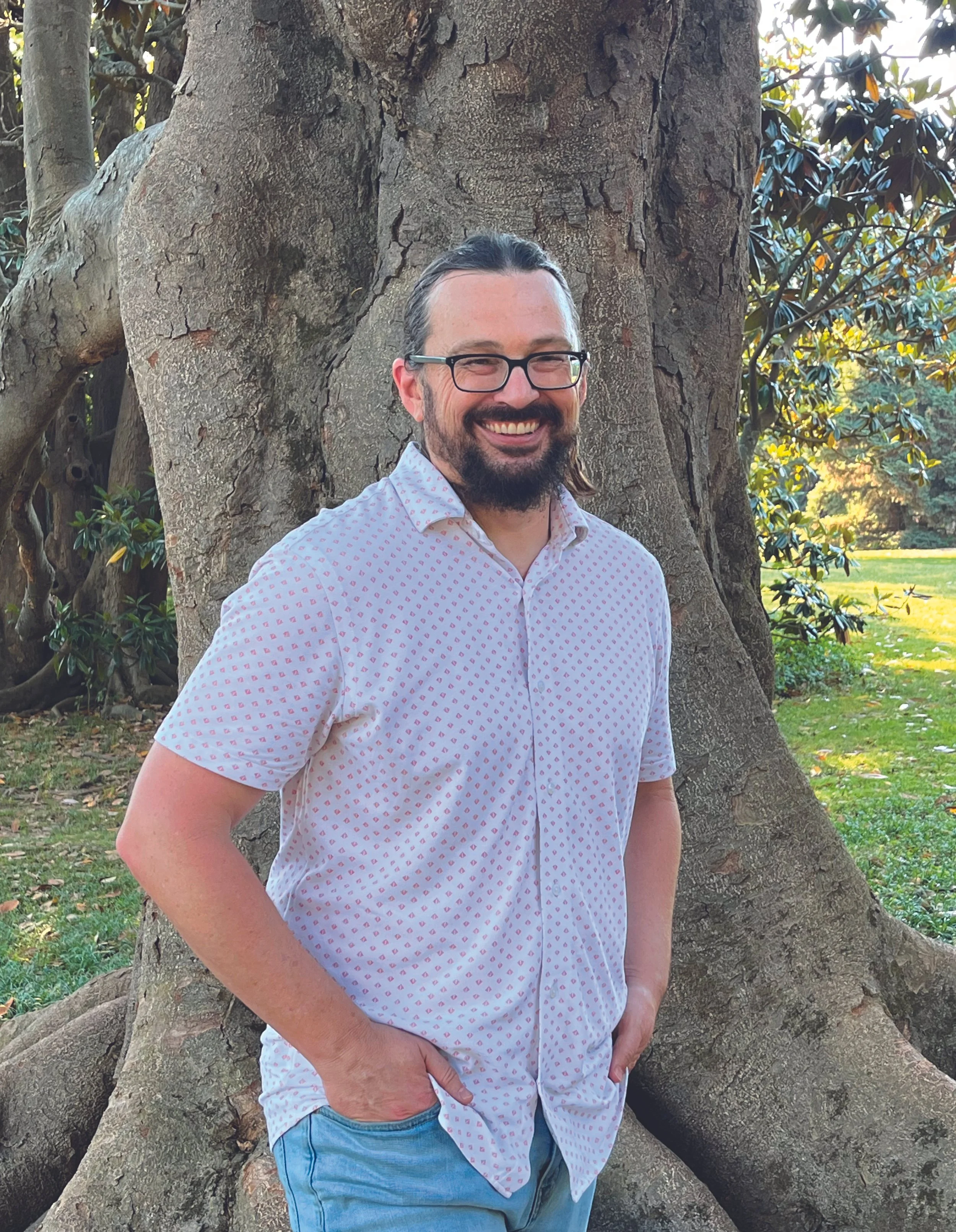
Gregory Smithers.
Although there’s never been an Indigenous American elected president of the United States, there was a citizen of the Kaw Nation who served as 31st vice president of the United States under President Herbert Hoover.
Gregory Smithers, Ph.D., also a VCU professor whose research focuses on Indigenous people and African Americans from the 18th century to the present, spoke with me about the people referred to as “merciless Indian savages” in the Declaration of Independence.
“It's a complex story for a document that really doesn't have any sort of legal standing throughout the course of the Republic's history,” he says. “It's just a set of principles that we try to aspire to.”
During the Revolution, Indigenous Americans were careful about which country to side with. “Native Americans are making calculations depending on where they are in the thirteen original colonies, based on who they perceive they can ally with to best protect their sovereignty,” says Gregory. “One of the great misconceptions of a hundred years of historical scholarship that we only just started to correct in the last generation is this notion that Native Americans supported the British or the Americans.”
Neither is true. Indigenous Americans sought to protect their own destiny on their own lands. “What Native Americans supported was a defense of their own sovereignty,” Gregory says. “And so they make these calculations based upon who they believe or who they perceive will provide them with the most gunpowder and weapons to fight and defend their sovereignty. Who they believe in their region would help them retain their sovereign lands. In a general sense, Native people throughout the Eastern Woodlands and Eastern North America believe that these alliances are sort of forming these extended kinship networks. And you're forming an agreement to both care for the lands and the waters that you're fighting to defend. And then you have a responsibility to each other not to possess those lands and waters, but to both mutually care for them going forward.”
By the last three decades of the 18th century, younger warriors begin to understand that neither the Americans nor the British will conform to Native Americans’ political and cultural standards. “Nonetheless, when alliances are being made at the beginning of the Revolutionary War, their chiefs are thinking, ‘Who can we align with? Who can best supply us to defend our lands, defend our waterways, and basically our sovereignty?’”
After the signing of the Declaration of Independence, in the South, things went from bad to worse for Native peoples. “Some of the fighting that Southern militias engaged in was truly genocidal,” says Gregory.He then mentions what happened to the Cherokees. “They have about fifty towns that they live in from northwestern South Carolina all the way up into the mountains, and the fifty towns are reduced to about twenty odd towns,” Gregory says. “They start fighting shortly after the Declaration of Independence as the word of it spreads through the South. We're talking about late July into August, September, and October. The damage is done very quickly. They're decimating the villages. I've got a book coming out soon that talks about that.”
It was a literal blood bath. “They scalped women and children,” says Gregory. “The Blue Ridge and all those waterways become akin to killing fields. There are reports of rivers and creeks just flowing red with blood. The dead bodies of Cherokee warriors and their families are everywhere. Storage facilities with corn are burnt down and council houses are set on fire. Fields are dug up. It was a horrific time.”
In all, about one-third of the Cherokee population was decimated during the Revolutionary War.
“It's what historians often refer to as overkill,” Gregory Smithers says.
* * *
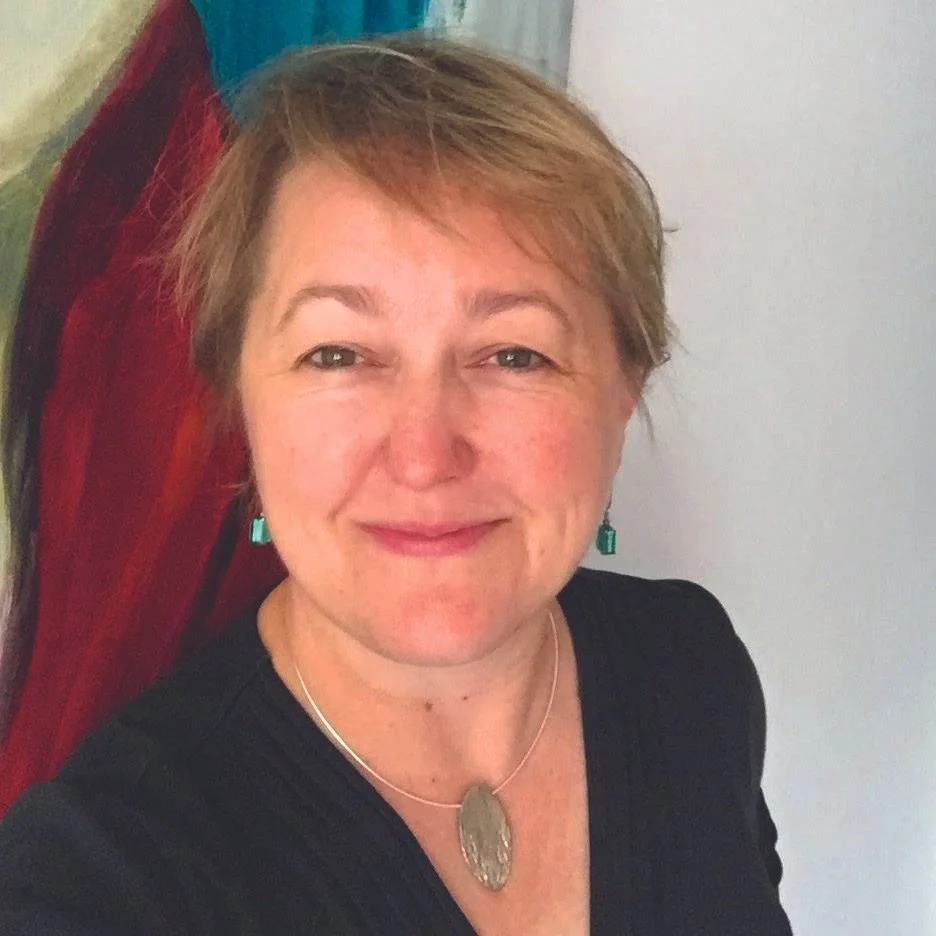
Carolyn Eastman.
Just last month, Carolyn Eastman, Ph.D, yet another VCU historian, delivered a lecture titled “Was the Declaration of Independence Really a Matter of Common Sense?” In it she reexamines the Declaration of Independence in the context of the political, cultural, and social forces that shaped the revolutionary moment, from the influence of Thomas Paine’s “Common Sense,” to debates over slavery, religion, and relationships with Native nations.
Like the other VCU professors I interview, Carolyn is a deep well of knowledge.
I ask her this: “What is the Declaration of Independence really?”
Without missing a beat, Carolyn says, “It's a breakup letter.”
And then she elaborates. “It's the members of the Continental Congress laying out the rationale for an incredibly difficult decision, which was to declare independence from a country that until six months previously, virtually nobody could have imagined. And not only because it was the world's military superpower, which is a not inconsiderable thing, but also because Americans had been proud to think of themselves as British. They enjoyed British liberty, which was the greatest kind of liberty in the world.”
At that time, according to Carolyn, a majority of the American public would not have supported the idea of breaking away from Great Britain. “I think it created enormous anxiety on the parts of the people who were doing the writing of that document,” says Carolyn.
And then we talk about the most notable words in the preamble of the document that speak of equality.
But not for all human beings.
“The hypocrisy that appears in this kind of rhetoric was noticeable at the time,” says Carolyn. “In Boston, during all of the imperial tensions, they had all kinds of street actions where patriots would come out and protest against the British. Always crying for liberty. And they would at the same time urge all the enslavers in the city to make sure that they kept their enslaved people home, so that the obvious hypocrisy would not appear in the crowd. A lot of people have pointed out over the years how perverse it was in some ways for American revolutionaries to be talking all about freedom and liberty while also enslaving people. We shouldn't utterly discount the power of cries for freedom and liberty. But nevertheless, I think that that hypocrisy was always there, not even below the surface. It was on the surface.”
She recalls the letter Abigail Adams wrote to her husband three months before the Declaration was ratified, where she basically asks him to include women’s rights in the founding document.
“John Adams's response to this ‘remember the ladies’ line in her letter is to laugh at her and to jokingly say, ‘Oh, now we're going to have to worry about children rising up against us and domestic servants and everything,’” says Carolyn. “But then as you look at a longer exchange between John and Abigail, you see that he kind of understands that this is a larger conversation.”
This founding document set the United States apart from every other country on Earth at the time. “What the Declaration did was set up the United States as a republic rather than any kind of a monarchy,” Carolyn says. “And therefore making it a country of laws rather than a country of men. That's a line that they used over and over and over again. And what that meant was that everyone could be equal under the law. There may be all kinds of social and cultural and status differences between people, but everyone had a place under the law. That is what it aspired to be.”
Over the course of our history, protections derived indirectly from this founding document have, until very recently, expanded to include more and more people. “How many different groups of Americans used the Declaration to make their own claims for civil rights over time?” Carolyn asks. “Women, enslaved people, Black Americans, Native Americans, on and on. It's so important to think about the ways that, until really recently with this crazy Supreme Court that we have now, the rights were expanding in the United States and it's in large part because of the ideals laid out in the Declaration. It still inspires people. It is wonderful vaulting language.”
Carolyn serves as president of the Society for Historians of the Early American Republic (SHEAR), which recently began a program called SHEAR Civics Exchange, designed to foster better understanding of the country's founding principles. On their website you can connect any kind of school or community group with local experts who can speak on a wide variety of subjects. To learn more please visit https://civics.shear.org/
As the interview came to a close, Carolyn told me what she did on the Fourth of July, what she does every Independence Day. She tuned her radio dial to NPR and listened as hosts, reporters, newscasters, and commentators read the Declaration of Independence. It’s something NPR has done for almost forty years, and has always been part of my family’s July 4th celebrations. No pyrotechnics, no martial music, no parades. Just pure words crafted by the founders.
While Carolyn listened to the broadcast, she wept.
Who wouldn’t?