
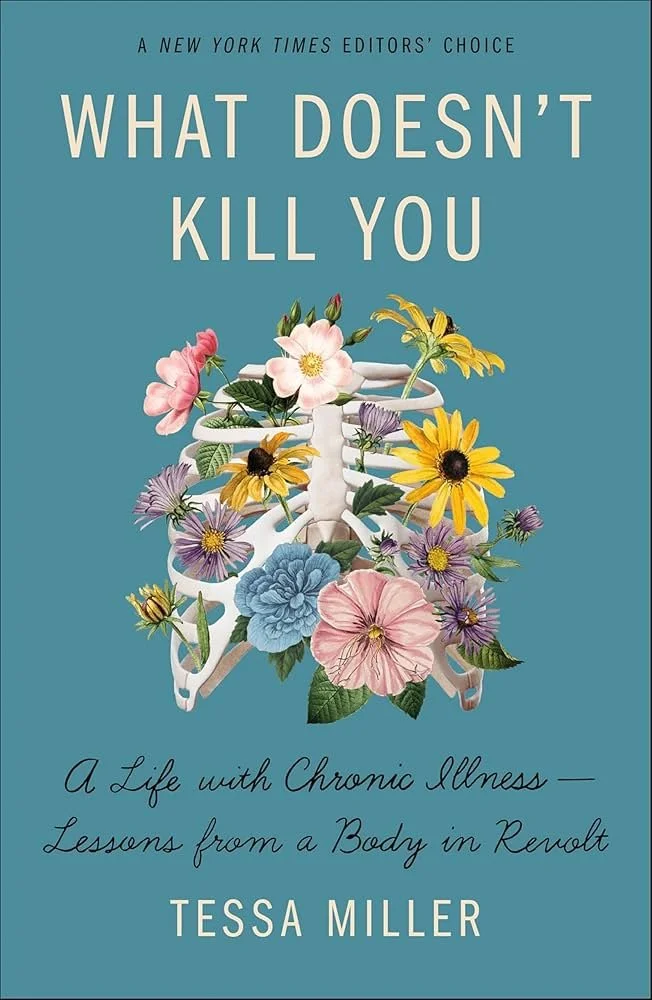
“What Doesn’t Kill You”
By Tessa Miller
$26.99
Henry Holt and Company
320 pages
“What Doesn’t Kill You”
by Fran Withrow 05.2026
Tessa Miller was just twenty-two years old when she was diagnosed with Crohn’s disease, a chronic illness in which the immune system attacks the digestive system. Crohn’s affects the entire gastrointestinal tract and can be extremely debilitating. Miller has twice come close to death as she deals with this serious illness. Treatment varies, but can include medication, surgery, ostomies, and even fecal transplants.
There is no cure.
Miller’s book, “What Doesn’t Kill You,” describes her Crohn’s disease journey with no holds barred, and while some readers might find her frank description of living with a gastrointestinal affliction embarrassing, I appreciated her willingness to be utterly honest. She chronicles her struggle to come to terms with this challenging illness while living life to the fullest extent, and we lucky readers are the beneficiaries of what she has learned along the way.
Miller uses her Crohn’s journey as a framework for living with any long-term illness. Chronic conditions are incurable, and include such diseases as diabetes, arthritis, endometriosis, heart disease, and fibromyalgia.
Miller’s years of living with Crohn’s and her extensive research make this book a valuable resource for people dealing with a chronic disease as well as for their families and caregivers. She discusses everything surrounding chronic illness. What qualities should one look for in a doctor? What about health insurance? She knows that since she is white, cisgendered, and thin, she enjoys medical advantages that others are denied. Even so, her dealings with health insurance are a huge source of stress and frustration.
That’s just the tip of the iceberg. How does a person with chronic illness deal with grief over the loss of the life they once had? How does one maintain a healthy relationship with a partner? What if you are a parent: what do you tell your children? How does one manage stress, which can bring on symptoms? And what if your illness means you can’t work a traditional 9-5 job?
Miller delves deeply into work related issues like whether to disclose your illness to employers. Who should know what you are dealing with, and how do you make that determination? Another chapter contains seven “secrets:” tools for talking with those who have a chronic illness. For instance, unsolicited advice is not helpful. (Well, duh.)
This book is also full of constructive tips covering everything from exploring mental health resources, finding a therapist, dealing with medical PTSD, and what to do if you feel you have been wrongly terminated from your job.
While living with any chronic illness is a challenge, it’s also important to make room for hope and gratitude. Miller has wisely included a chapter in which she asks thirty-eight people with chronic diseases to share their experiences of joy. These comments are a pleasure to read.
Both a heartfelt memoir as well as a reference for living with, or caring for, someone with chronic illness, “What Doesn’t Kill You” is a book worth reading and rereading. Miller has written a much needed guidebook for navigating an unexpected life with awareness and expertise. Five stars.